If you’ve spent any time scrolling through design blogs or interior decor feeds lately, you’ve likely run across the phrase “Bookshelf Wealth.”
For years, home decor trends leaned heavily into crisp, sterile minimalism. We saw shelves lined with perfectly symmetrical, color-coordinated modern hardbacks—sometimes even turned backward so the pages faced out, hiding the titles entirely just to preserve a neutral color palette.
Bookshelf Wealth is the exact opposite. It’s a design philosophy that embraces cozy, intellectual, lived-in warmth. It’s an aesthetic that proudly declares: “I have traveled, I read, and I collect.”
The absolute best part? You cannot buy authentic Bookshelf Wealth at a big-box corporate furniture store. True wealth of this kind is built on history, character, and curation. Here is how you can use authentic vintage books and unique curiosity pieces to bring this gorgeous, timeless look into your own home.
1. The Foundation: Choosing Vintage Books with Soul
To build a shelf that feels genuinely historic, you need to step away from brand-new releases and seek out books that have lived a full life. When sourcing books for a Bookshelf Wealth display, you want to focus on texture and character over flawless perfection.
When hunting for the perfect anchor pieces, keep an eye out for these specific details:
- Rich Textures and Materials: Look for embossed cloth covers, genuine leather bindings, heavy paper stock, and gilt-edged pages that catch the ambient light of a room.
- A Rich, Lived-In Palette: Earthy, historic tones work beautifully here. Think deep forest greens, rich burgundies, warm mustard yellows, and dark navy blues.
- Honest Character: Do not fear a sun-faded spine, a gently tattered dust jacket, or mild foxing (those beautiful, tiny brown age spots on old paper). These aren’t defects; they are proof of a story well-traveled.
The Decorator’s Shortcut: If you are starting your library from scratch, collecting individual books can take years. A brilliant way to establish an immediate foundation is by utilizing curated vintage book bundles. Grouping lesser-known vintage works strictly by color or era allows you to instantly inject a cohesive, old-world charm onto an empty shelf.
2. The Character: Weaving in Intricate “Curiosities”
A true Bookshelf Wealth display is never just a wall of uninterrupted text. To make your shelves truly mesmerizing, you need to break up the rows of paper and cloth with intriguing, tactile objects that invite closer inspection.
This is where your unique personality and eye for antiques come into play. By mixing old-world curiosities among your literature, you create visual depth.
A few classic vintage elements that look stunning on a styled shelf include:
- Antique Desk Accessories: A heavy brass magnifying glass, a solid iron inkwell, or a vintage fountain pen tucked casually on top of a stack of books.
- Sculptural Metals and Stone: Think carved marble bookends, heavy cast-iron keys on a ring, or a small, ticking mechanical desk clock from a bygone era.
- Natural History Elements: Framed botanical sketches, vintage compasses, or antique hour-glasses bring a wonderful explorer’s aesthetic to the room.
3. The Art of the Layer: How to Style Without Looking “Staged”
The secret to Bookshelf Wealth is making the shelves look like they evolved naturally over decades, rather than being staged in a single afternoon. To achieve that effortlessly curated look, follow these four foundational styling rules:
Vary the Orientation
Avoid lining up your books in predictable library rows. Break up the monotony by mixing vertical rows with short, horizontal stacks. Horizontal stacks are incredibly functional—you can use them as literal pedestals to elevate smaller brass curiosities or clocks.
Master the Art of the Overlap
Don’t be afraid to let items partially block one another. This isn’t a retail display; it’s a home library. Let a small vintage brass candlestick sit slightly in front of a stack of old paperbacks. Lean an intricate piece of artwork right against a row of classic literature.
Let the Display Breathe
While this trend leans away from minimalism, it shouldn’t look like chaotic clutter. Leave intentional pockets of negative space. Giving your items a little room to breathe allows the eye to rest and truly appreciate your rarest, most beautiful pieces.
Try the Artwork Trick
One of the ultimate hallmarks of the Bookshelf Wealth trend is hanging a small, heavily framed vintage oil painting or sketch directly onto the front face of the wooden bookshelf frame itself. It adds an incredible layer of depth and gives your room an intimate, museum-like quality.
Ready to Begin Your Collection?
Building a dream library is a lifelong love affair with hunting, collecting, and appreciating the craftsmanship of the past. If you are ready to skip the modern reproductions and start styling your home with pieces that carry a genuine soul, we are here to help.
We spend our weeks scouting estate sales, hidden barns, and flea markets to rescue beautifully aged literature and historical curiosities so you don’t have to.
Explore our freshly updated inventory of hand-selected vintage book bundles, timeless brass accents, and rare curiosities over at VintageNow2018 on Etsy. * Let’s fill those shelves with history.*
We’d love to hear from you! What is the strangest, oldest, or most sentimental item currently sitting on your bookshelf? Let us know in the comments below!

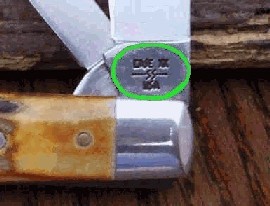
 The above stamps were the most common used by Case on knives that were manufactured in the years prior to 1920.
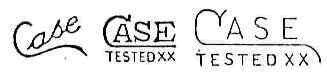 You will find that most books date this stamp as being used from 1920 to 1940. I have found that many serious knife collectors disagree with this date range and say that it was actually used from 1919 to 1945. It has been my experience that collectors call knives with these stamps “Tested” or “Circle C” era knives.
 You will find that most books date this stamp as 1940 – 1964. I have found that many serious knife collectors say that it was actually used from 1945 – 1964. It has been my experience that collectors call knives with these stamps “XX” era knives.


 The stamps used from 1970-1979 are the same as those used between 1965-1969 except that dots were added below the U.S.A. 10 dots were added in 1970, and for every year thereafter, one dot was removed so that each year had a unique stamp. For clarification, note that ten dots appear on 1970 knives, nine dots appear in 1971 knives, eight on 1972 knives, and so on.
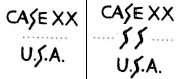 Throughout the 1980’s, Case used the same dating system as the 70’s. 1980 knives have 10 dots, and one is removed each year. Unlike 70’s knives however, the s’s are lightening shaped, and the dots are located between the Case XX, and the U.S.A.
 Beginning in 1990, Case replaced the dating system with a stamp that imprinted the actual date on the knife tang. This was not as popular with collectors, so Case changed back to the dot dating system in the middle of 1993.
  From the middle of 1993 to 1999, Case returned to the dot system that was used in the 70’s and 80’s. Case also returned to using a long tailed C on the word Case which resembled the older tang stamps. The dots started in 1993, and one was removed for every year until 2000. On some knives in this era, the S in U.S.A. is lightening shaped like those in the 80’s.
 In 2000, Case developed a dating system using an old style Case XX stamp along with a mix of dots and x’s both above the Case XX symbol and below. Case started with 5 x’s, and 5 dots in 2000. For each year thereafter, they removed one dot. When all of the dots were gone after 2005, the x’s were removed one by one until 2010.
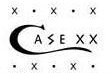 For the year 2010, Case switched to a tang stamp dating system similar to the prior decade (2000 – 2009). The 2010 stamp started with 3 xs, 2 dots on top & 2 xs 3 dots on bottom. One dot removed for each year up to and including 2015. For each year thereafter, one x removed each year. 2019 knives will have a single x.